





Poker is one of the most widely played card games in Canada, pairing simple, learnable rules with strategy deep enough to study for a lifetime. This site is a plain-English starting point for Canadian players: it explains how the game works, what beats what, which variants you will meet at the table, how to think strategically, and how the law treats poker across the country. Whether you have never held a hand or you simply want to sharpen a game you already play, the guides below split the subject into five clear pillars so you can learn at your own pace — and play responsibly.
Quick Facts
| Is it legal? | Yes — poker is legal in Canada, regulated province by province |
|---|---|
| Most popular game | Texas Hold’em |
| Regulated private online markets | Ontario (since 4 April 2022) and Alberta (since 13 July 2026) |
| Government Crown platforms | PlayNow (British Columbia, Manitoba, Saskatchewan); Espacejeux (Quebec) |
| Minimum age | 18 in Alberta, Manitoba & Quebec; 19 in all other provinces and territories |
| Ranked hands | 10, from Royal Flush (best) down to High Card (worst) |
| Play responsibly | ConnexOntario: 1-866-531-2600, or text CONNEX to 247247 |
What is poker, and why is it so popular in Canada?
Poker is a family of card games in which players bet on who holds the strongest five-card hand. Over a series of betting rounds, players can call (match a bet), raise (increase it) or fold (give up the hand), and the pot of wagered chips goes to the last player standing or to the best hand at a showdown. Because you act on incomplete information — you cannot see your opponents’ cards — poker rewards a mix of mathematics, psychology and discipline, which is why it is often described as a game of skill with an element of chance.
In Canada, the best-known form by a wide margin is Texas Hold’em, the version played in televised tournaments and in most casino and online poker rooms. The game is played socially at kitchen tables, competitively in provincial casino poker rooms, and online through regulated sites. That range — from a casual night with friends to high-stakes tournaments — is a big part of its enduring appeal.
Is poker legal in Canada?
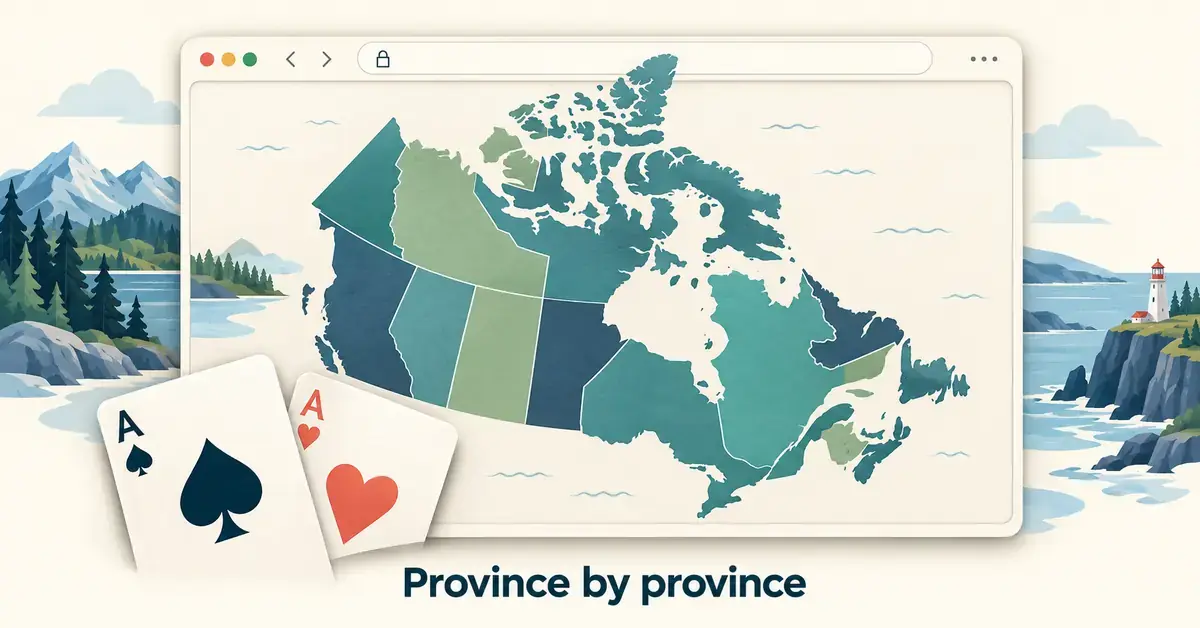
Yes — playing poker is legal across Canada, but it is regulated province by province rather than under a single national law. Gambling falls under the federal Criminal Code, which prohibits most gaming unless it is specifically permitted. Section 207 provides the key exception: it lets each provincial government “conduct and manage” lottery schemes — a term defined broadly enough to cover casino games, sports betting and poker — within its own borders. In practice this means the rules, the legal sites and the minimum age all depend on where in Canada you live.
There is one notable additional authority: the Kahnawake Gaming Commission, based in the Mohawk territory of Kahnawake in Quebec, licenses and hosts online gaming operations under its own territorial framework. For most players, though, the relevant question is simply what their own province allows.
How poker is regulated across the provinces
Regulation differs sharply from one province to the next, and it has changed quickly in recent years. Ontario opened Canada’s first regulated private-operator online market on 4 April 2022, run by iGaming Ontario (iGO) and overseen by the Alcohol and Gaming Commission of Ontario (AGCO). Licensed poker rooms there include PokerStars Ontario, partypoker Ontario, 888poker Ontario, GGPoker Ontario and BetMGM Poker Ontario. Ontario’s online poker is “ring-fenced,” meaning residents play only against other people physically located in the province.
Alberta became the second province with a regulated open iGaming market, which launched on 13 July 2026 under provincial legislation. In provinces without a private-operator market, poker is offered through government Crown platforms instead: BCLC’s PlayNow serves British Columbia, Manitoba and Saskatchewan, and Loto-Quebec runs Espacejeux in Quebec, with several of these provinces sharing a combined Canadian poker network so there are enough players at the tables. Live poker, meanwhile, is played in licensed casinos regulated by each province.
The legal minimum age also depends on your province. It is 18 in Alberta, Manitoba and Quebec, and 19 in every other province and territory. In Ontario, the age for online casino gaming and online sports betting is 19.
Learn poker: the five pillars
The guides on this site are organised into five pillars. Start wherever fits your experience: complete beginners usually begin with the rules and the hand rankings, while returning players often jump straight to variants, strategy or the Canada-specific rules.
The Five Pillars
- How to Play Poker — the rules, betting rounds and the flow of a single hand, from the blinds to the showdown.
- Poker Hand Rankings — all 10 hands in order, from the Royal Flush to a bare High Card.
- Poker Variants — Texas Hold’em, Omaha, Seven-Card Stud and how the main games differ.
- Poker Strategy — position, starting hands, pot odds, bankroll management and reading opponents.
- Poker in Canada — the law, the regulated sites and the provincial rules that apply where you live.
- Responsible Gambling — budgeting, self-exclusion tools and where to find free help.
How to play poker
This pillar covers the mechanics every player needs: the blinds and the ante, the order of betting rounds (in Hold’em: pre-flop, flop, turn and river), and what it means to check, bet, call, raise or fold. It also explains how a showdown works and how the pot is awarded. If you are brand new, this is the place to begin — the rest of the game makes far more sense once the flow of a single hand is clear.
Poker hand rankings
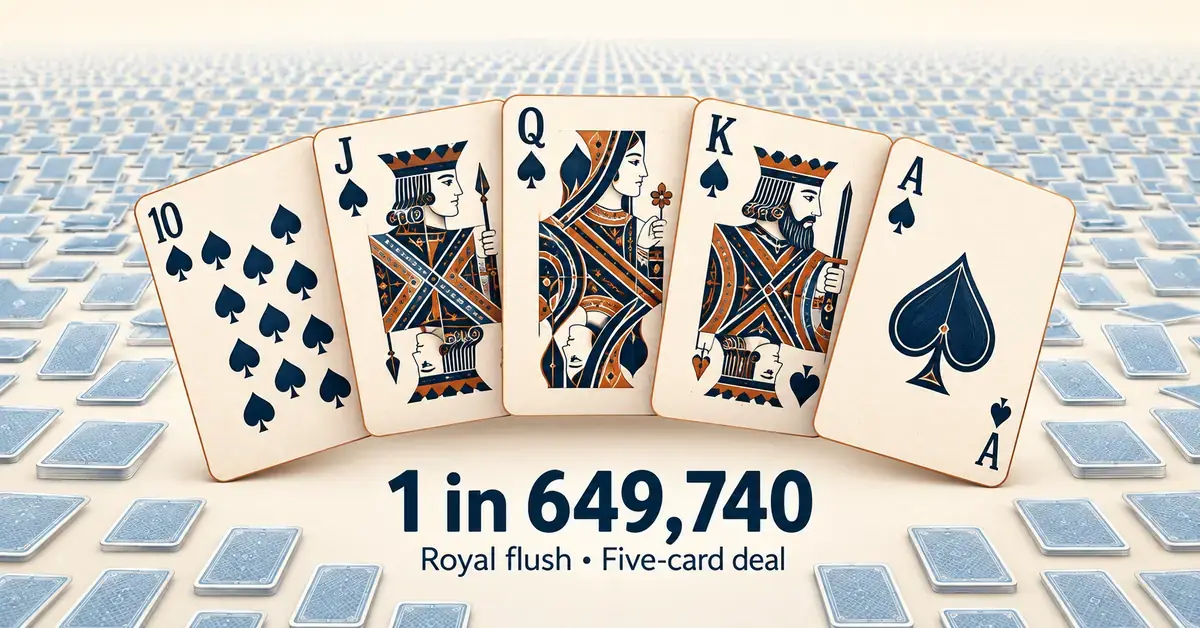
Knowing which hand beats which is the foundation of every decision you make. There are ten standard ranks, from strongest to weakest: Royal Flush, Straight Flush, Four of a Kind, Full House, Flush, Straight, Three of a Kind, Two Pair, One Pair and High Card. A Royal Flush (A-K-Q-J-10 of one suit) is the best possible hand; High Card — no pair, no combination — is the weakest. Memorising this order is the single most useful thing a beginner can do.
Poker variants
Texas Hold’em is the most popular variant, but it is far from the only one. This pillar introduces the main games you will encounter — Texas Hold’em, Omaha (including Pot-Limit Omaha), Seven-Card Stud and others — and explains how they differ in how many cards you receive, how betting is capped and which skills matter most. Understanding the variants helps you choose games that suit your style and avoid costly surprises at an unfamiliar table.
Poker strategy
Strategy is where poker rewards study. This pillar explains core concepts such as table position, starting-hand selection, pot odds (comparing the size of a bet to the pot to judge whether a call is profitable), bankroll management and reading betting patterns. None of it guarantees a win on any given hand — poker always involves chance — but sound strategy is what separates consistent players from the rest over the long run.
Poker in Canada
This pillar goes deeper on the Canadian picture summarised above: the Criminal Code framework, how each province and the Kahnawake Gaming Commission regulate the game, which legal sites and venues are available where you live, and the minimum-age rules. It is the place to check before you play for real money so you stay on the right side of your province’s rules.
Common mistakes new poker players make
Most beginners lose chips to a handful of avoidable errors rather than to bad luck. Knowing them in advance is one of the fastest ways to improve.
- Playing too many hands. New players often call with weak starting cards “to see the flop.” Folding more hands pre-flop is usually the more profitable choice.
- Ignoring position. Acting after your opponents gives you more information; many beginners play early and late positions exactly the same way.
- Chasing losses. Betting bigger to win back money already lost is how small losses become large ones — and it is a warning sign of problem gambling.
- Confusing the rankings. Misremembering that a flush beats a straight, or that a full house beats a flush, leads to bad calls at showdown.
- Playing above your bankroll. Sitting at stakes you cannot comfortably afford forces fearful, losing decisions.
- Bluffing too much. Bluffs work against thinking opponents in the right spots; firing them indiscriminately simply donates chips.
Who this site is for
This site is written for players in Canada at every level: the complete beginner who needs the rules spelled out, the casual player who wants to understand the variants before a home game or a casino visit, and the improving player looking to tighten up strategy. Every technical term is explained the first time it appears, the guides are factual rather than promotional, and the Canadian legal and responsible-play context is built in throughout. It is an educational resource — not a gambling operator, and not advice to wager money.
Play responsibly
Poker should stay fun. It involves real money and real risk, and no strategy, demo table or tip can guarantee a win or remove the element of chance. Set a budget before you play, treat any losses as the cost of entertainment, never borrow to play, and take a break if the game stops being enjoyable. You must also meet your province’s minimum age — 18 in Alberta, Manitoba and Quebec, and 19 elsewhere.
If gambling is causing stress for you or someone you know, free and confidential help is available across Canada. The Responsible Gambling Council offers tools, self-assessments and a directory of provincial helplines and self-exclusion programs, and ConnexOntario provides 24/7 support at 1-866-531-2600 (or text CONNEX to 247247). This section is general information, not medical or financial advice.
Sources
Frequently Asked Questions (FAQ)
Is poker legal in Canada?
Yes. Poker is legal across Canada, but it is regulated province by province under the federal Criminal Code, which lets each province conduct and manage gaming within its borders. The legal sites, venues and minimum age depend on where you live.
What is the easiest poker game for beginners to learn?
Texas Hold’em is the usual starting point. Each player gets two private cards and shares five community cards, so the rules are quick to grasp, and it is the most widely available game in Canadian casinos and on regulated sites.
What are the poker hand rankings from best to worst?
From strongest to weakest: Royal Flush, Straight Flush, Four of a Kind, Full House, Flush, Straight, Three of a Kind, Two Pair, One Pair and High Card. Memorising this order is the first thing every new player should do.
How old do I have to be to play poker in Canada?
The minimum age is 18 in Alberta, Manitoba and Quebec, and 19 in every other province and territory. In Ontario, online casino gaming requires players to be 19.
Where can I get help if poker stops being fun?
Free, confidential support is available nationwide. The Responsible Gambling Council lists provincial helplines and self-exclusion programs, and ConnexOntario offers 24/7 help at 1-866-531-2600. Setting a budget and using self-exclusion tools can also help you stay in control.